Give Your Eyes Regular Screen Breaks
Periodically look away from close screens, blink naturally and allow the eye area to relax.
FaceTone Concern Guide
If your eyes look tired, puffy, heavy or less open than before, the cause may be more than lack of sleep alone. Screen strain, facial tension, puffiness, posture and natural changes around the eye area can all influence how the eyes appear.
This guide will help you understand some of the common contributors and the supportive habits and FaceTone practices that may help your eye area look more rested and relaxed.
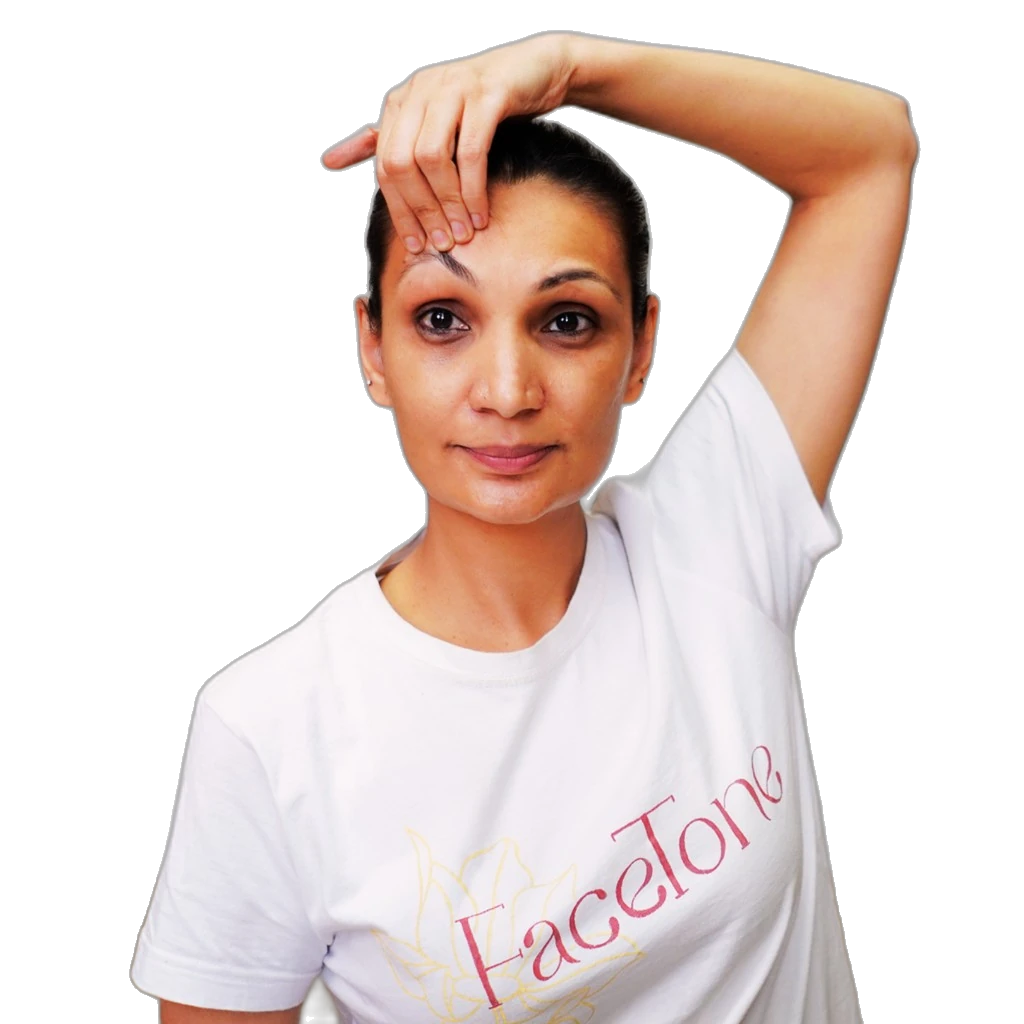
The eye area is influenced by sleep, facial tension, daily habits and natural changes in the tissues around the eyes.
Changes around the eyes often build gradually.
Frequent screen use, repeated squinting, facial tension, inconsistent rest, recurring puffiness and natural age-related changes may all influence how open or refreshed the eyes appear.
The goal is not to force the eyes wider or repeatedly pull the surrounding skin. A better approach is to support relaxation, controlled facial movement, posture and whole-face balance.
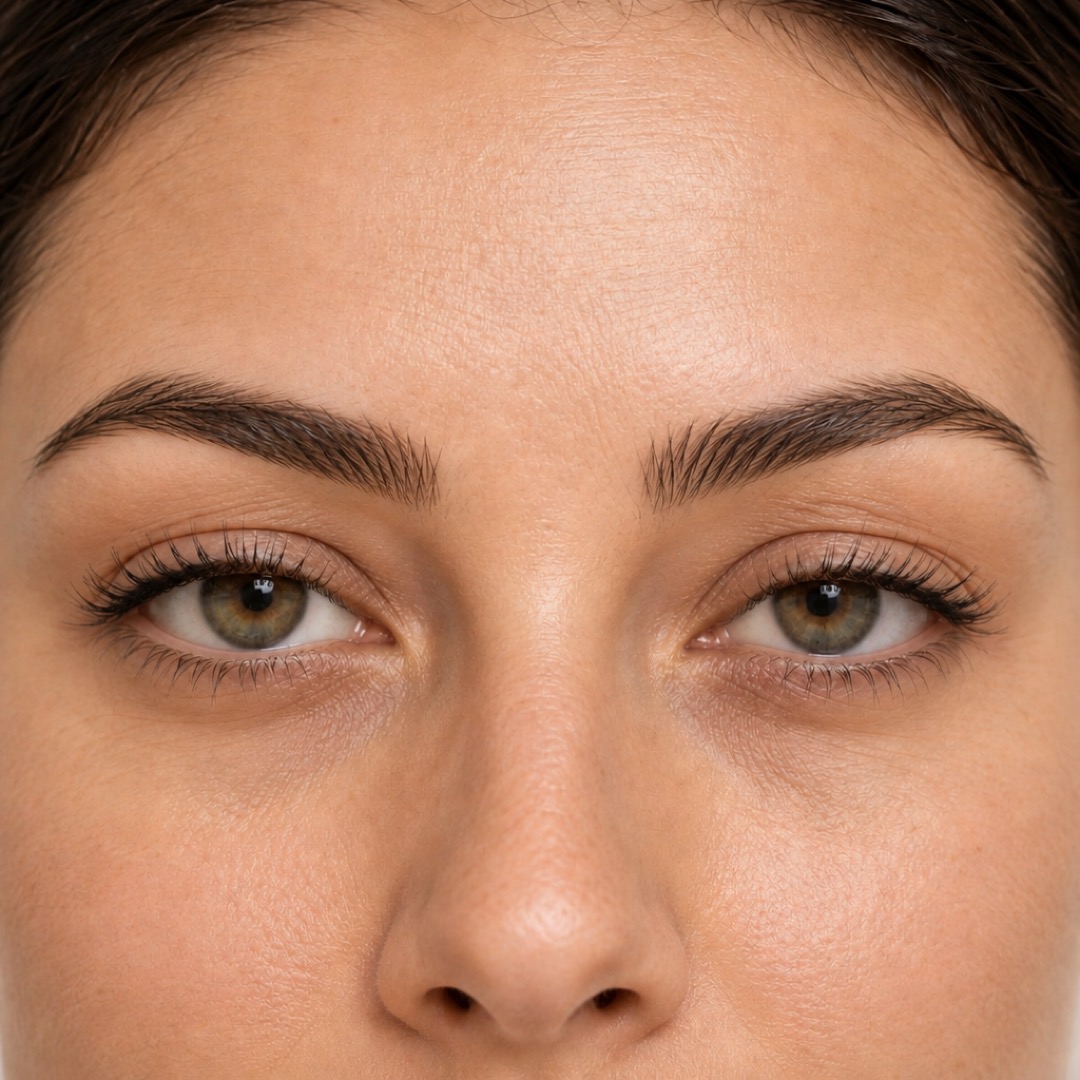
Periodically look away from close screens, blink naturally and allow the eye area to relax.
Check whether you frequently raise your eyebrows, squint or tighten your forehead while concentrating.
A forward-head posture can increase tension through the neck and face. Periodically bring your head back over your shoulders.
No food can directly lift the eye area, but balanced nutrition supports normal skin, tissue and overall wellbeing.
Protein supplies amino acids used throughout the body's muscles and tissues.
Vitamin C supports normal collagen formation and is found in many fruits and vegetables.
Healthy fats form part of a balanced diet and support normal skin function.
Around the eyes, keep the work light — the skin is delicate, so avoid pulling or forcing the eyes open.
The eye area does not work in isolation. The brows, forehead, cheeks, jaw, neck and posture can all influence how the face moves and rests. FaceTone therefore encourages balanced whole-face practice rather than repeatedly targeting only the eyes.
Tension around the eyes, forehead and brows can make the face look and feel tired. Relaxation is an important part of FaceTone practice alongside controlled facial movement.
Trainer note
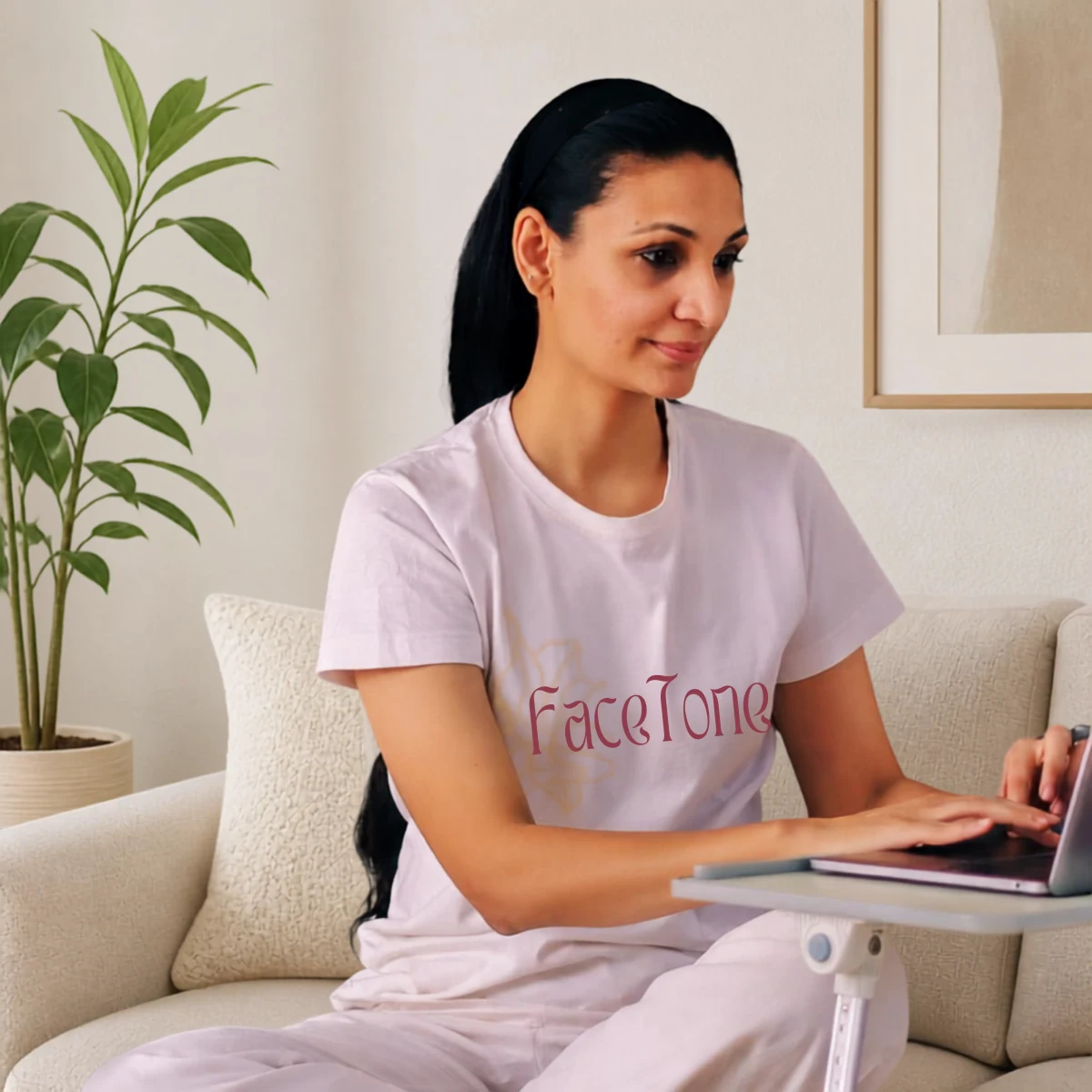
About Sheetal PungliyaWhen the eyes look tired or heavy, people often try to pull the skin upward or open the eyes more forcefully. I prefer a gentler approach. First notice whether you are squinting, holding tension in the forehead or spending long hours on screens. Relaxation, posture and balanced facial movement can be just as important as the eye exercises themselves.
Join FaceTone's online programs to address tired or droopy eyes with Face Yoga and complementary practices such as lymphatic drainage, posture work, relaxation techniques.
The appearance of the eye area can be influenced by more than sleep. Screen strain, puffiness, facial tension, posture and natural changes in the tissues around the eyes may all contribute.
Face Yoga can help train controlled facial movement and awareness around the eyes and brows. With gentle, consistent practice, it may support a more relaxed and refreshed-looking eye area, although results vary.
Long periods of close screen use may contribute to visual fatigue, reduced blinking, squinting and tension around the eyes and forehead, which can make the area feel or look tired.
FaceTone does not recommend repeatedly targeting one facial area in isolation. The face works as an interconnected system, so balanced whole-face practice is preferred.
You can begin with gentle movements such as Soft Eye & Brow Support, Gentle Temple Lift and Slow Eye Blink Relaxation. See the Eye Face Yoga Exercises page for guidance.
Start your journey
Try it out this weekend. In just 30 mins you can also see the change.
Register for Free250,000 already attended