Prioritise Regular Sleep
A consistent sleep routine supports overall recovery and can influence how rested your face looks.

FaceTone Concern Guide
If your face looks dull, tired or less fresh than usual, it may not be about skincare alone. Sleep, hydration, stress, facial tension, puffiness, nutrition and everyday habits can all influence how refreshed your face appears.
This guide will help you understand some of the common contributors and the supportive habits and FaceTone practices that may help your face look more rested, relaxed and naturally radiant.

A lack of visible glow is rarely caused by one factor alone. How rested, hydrated and relaxed you are can all affect the way your face looks.
The face can look different from day to day depending on sleep, stress, hydration, puffiness and lifestyle.
Over time, natural age-related changes in the skin and facial tissues can also influence texture, firmness and how light reflects from the face.
FaceTone does not treat glow as something created by one exercise. The approach is to support the whole face through balanced movement, relaxation and consistent everyday care.
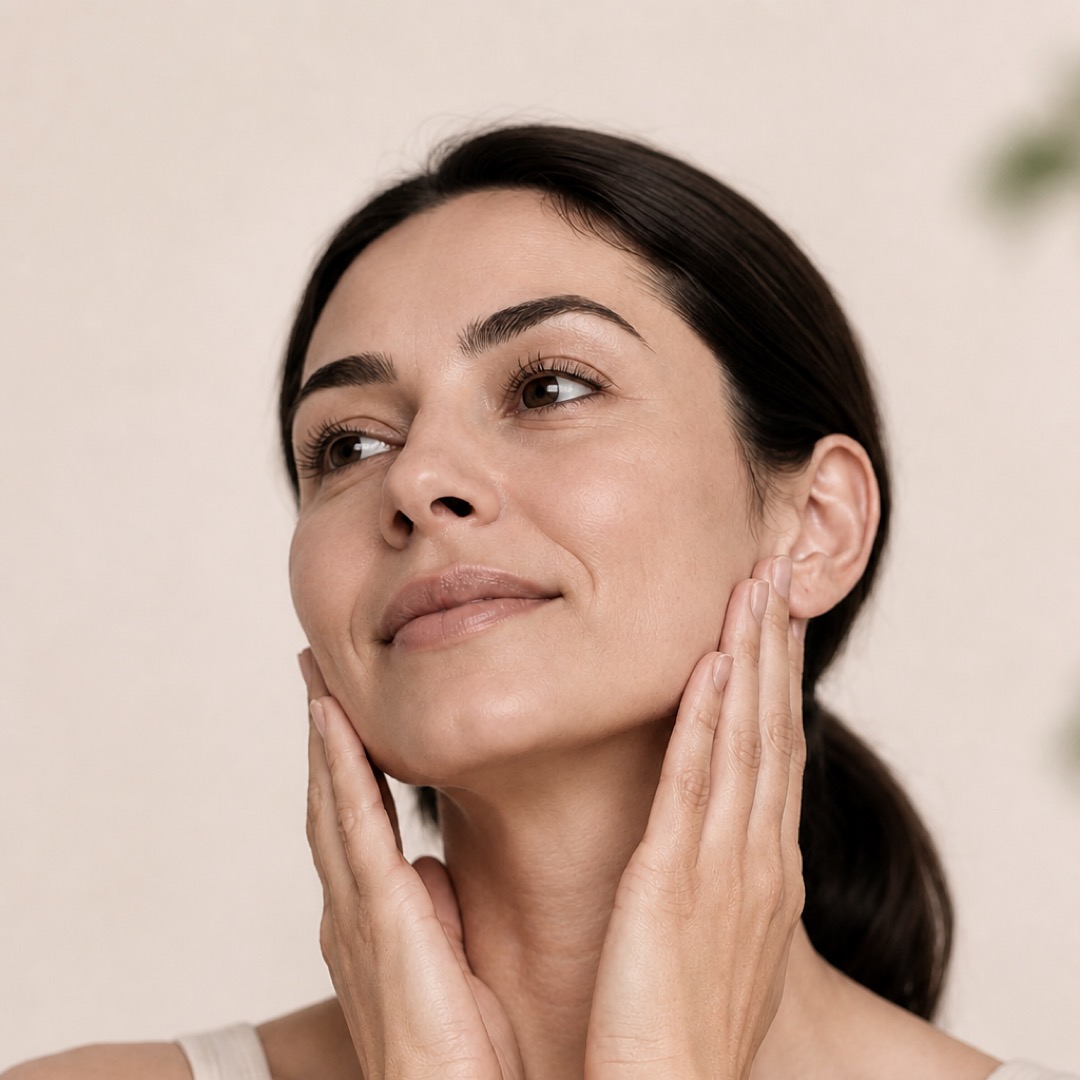
A consistent sleep routine supports overall recovery and can influence how rested your face looks.
Drink fluids regularly through the day rather than relying on occasional large amounts.
Periodically notice whether you are clenching your jaw, tightening your lips or holding tension around your eyes and forehead.
There is no single “glow food,” but balanced nutrition supplies nutrients used by the skin and tissues throughout the body.
Protein provides amino acids used throughout the body's skin, muscles and other tissues.
Vitamin C supports normal collagen formation and can be obtained from fruits and vegetables.
A varied intake of fruits and vegetables provides vitamins, minerals and naturally occurring plant compounds as part of a balanced diet.
A fresher-looking face usually comes from balanced whole-face work — not from repeating one exercise to “create glow.”
The appearance of the face is not determined by one muscle or one area. FaceTone works with the cheeks, eyes, forehead, jaw, neck and facial movement together rather than repeatedly targeting whichever area looks tired that day.
A face carrying constant tension can look and feel tired. FaceTone therefore includes relaxation alongside facial movement to help the face soften and recover from unnecessary tension.

Trainer note
About Sheetal PungliyaWhen someone tells me their face has lost its glow, I don't immediately look for one exercise to fix it. I look at the bigger picture — sleep, stress, hydration, facial tension and how the whole face is moving. Face Yoga can be one supportive part of that routine, but consistency in everyday habits matters too. Keep the practice gentle and allow the face to relax rather than constantly trying to “lift” it.
Join FaceTone's online programs to address dull skin and lack of glow with Face Yoga and complementary practices such as lymphatic drainage, posture work, relaxation techniques.
The appearance of the face can also be influenced by sleep, hydration, stress, nutrition, puffiness, facial tension, sun exposure and other lifestyle factors. Skincare is only one part of facial wellness.
Face Yoga does not directly treat skin conditions or guarantee glowing skin. Facial movement and relaxation may support a more refreshed and relaxed-looking face when used as part of a balanced routine.
Holding tension around the jaw, eyes, forehead and mouth can influence how relaxed the face appears. Becoming aware of this tension and learning to soften the face can be useful.
FaceTone does not recommend repeatedly targeting one area or using one “glow exercise.” A balanced whole-face practice is preferred.
A simple whole-face practice can include gentle movements for the cheeks, eyes, forehead and lower face. See the Full Face Yoga Exercises page for guidance.
Start your journey
Try it out this weekend. In just 30 mins you can also see the change.
Register for Free250,000 already attended