Start the Day With Gentle Movement
Normal body and facial movement after waking can help you transition out of long periods of stillness.

FaceTone Concern Guide
If your face sometimes looks puffy, heavy or less defined — especially in the morning — temporary fluid retention, sleep, lifestyle, posture and everyday facial tension may all play a role.
At the same time, tension around the jaw, brows, eyes and mouth can make the face feel tight or tired even when visible puffiness is mild. This guide looks at both concerns and the supportive FaceTone practices that may help.

Puffiness and facial tension are different, but they can sometimes appear together and make the face look heavier or feel less relaxed.
It is common for facial appearance to vary between morning and later in the day.
While you sleep, body position and normal fluid movement can contribute to temporary puffiness around the eyes, cheeks and lower face.
Sleep quality, hydration, individual anatomy and lifestyle may also influence how noticeable it is.
Temporary morning puffiness is different from facial fat and should not automatically be treated as a weight concern.
Many people hold tension in the face without realising it.
Repeated jaw clenching, brow tightening, squinting or pressing the lips together can influence how the face moves and rests.
A tense face may look tired, compressed or less relaxed even when there is no major structural change.
The aim is not to eliminate facial expression — it is to notice unnecessary tension and allow the face to soften when that tension is no longer needed.
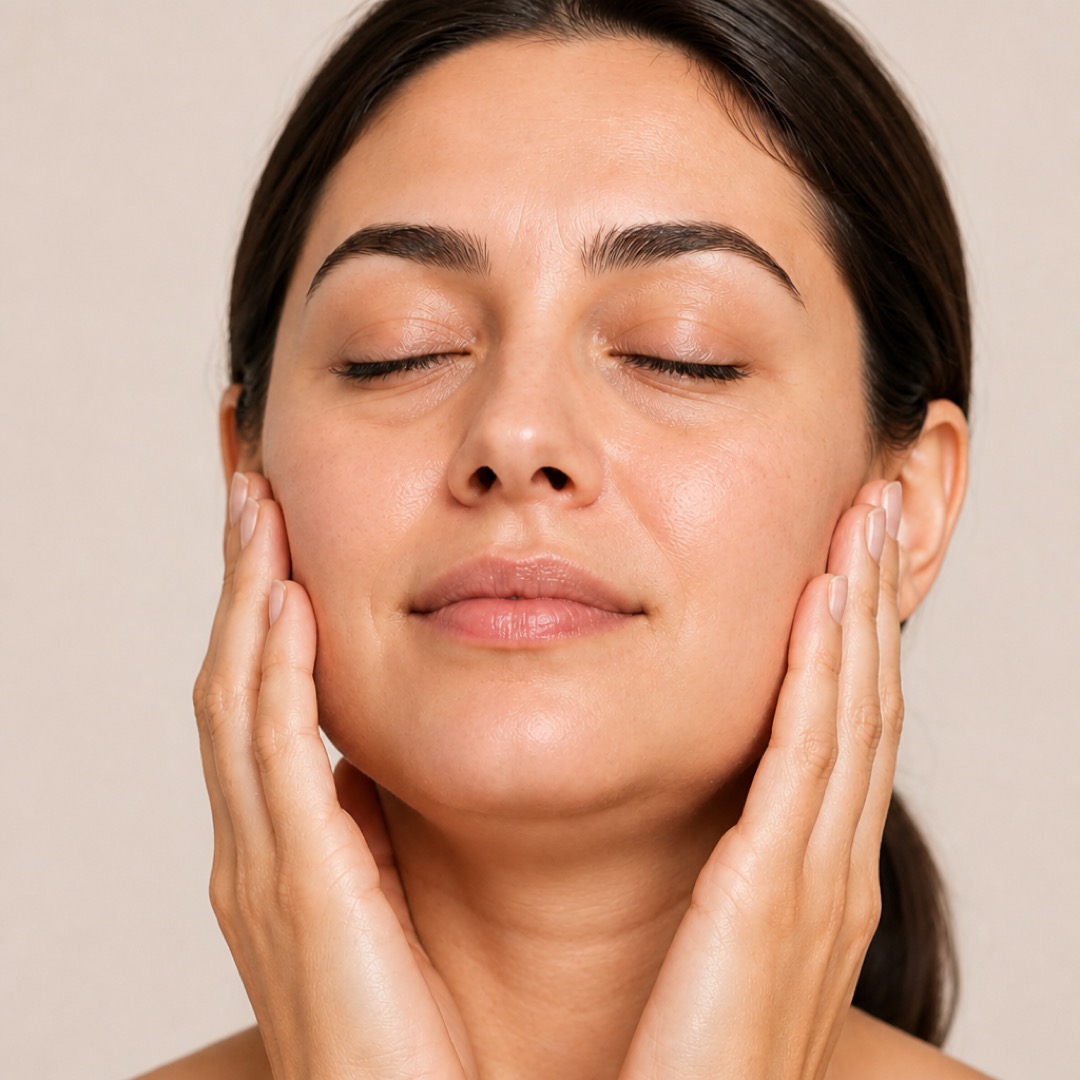
Normal body and facial movement after waking can help you transition out of long periods of stillness.
Regular hydration supports normal body and tissue function.
Several times during the day, notice whether your jaw is clenched or your brows are being held tightly together.
There is no single food that removes facial puffiness, but everyday eating and hydration can influence overall wellbeing and normal fluid balance.
Consistent fluid intake supports normal body function and hydration.
Very salty meals can influence temporary fluid retention in some people. Focus on an overall balanced eating pattern rather than extreme restriction.
Protein provides amino acids used throughout the body's muscles and tissues.
Instead of repeatedly working whichever area looks puffy that day, use whole-face movements that help the face settle and release tension.
Gentle lymphatic techniques can be used as a supportive practice when temporary facial puffiness is present. FaceTone uses these techniques carefully rather than aggressive rubbing or pressure.
A face that is constantly clenching, squinting or holding tension may benefit from learning how to soften between expressions. Relaxation is therefore an important part of FaceTone's whole-face practice.

Trainer note
About Sheetal PungliyaIf your face looks puffy or feels heavy, don't immediately start doing stronger exercises. First notice what is happening — is it temporary morning puffiness, are you holding tension in your jaw or brows, or have you been sitting in the same posture for hours? I prefer gentle movement, relaxation and whole-face awareness rather than aggressively working the area that looks different that day.
Join FaceTone's online programs to address facial tension and puffiness with Face Yoga and complementary practices such as lymphatic drainage, posture work, relaxation techniques.
Temporary morning puffiness can be influenced by sleep position, normal fluid movement, hydration, lifestyle and individual facial structure.
No. Puffiness can fluctuate during the day and may be related to temporary fluid retention, while facial fat is part of the body's tissues and does not usually change dramatically from morning to evening.
Gentle facial movement and supportive techniques may help some people feel more refreshed, but Face Yoga should not be presented as a medical treatment for swelling.
Jaw clenching, brow tightening, squinting, stress, prolonged screen use and posture can all contribute to unnecessary facial tension.
FaceTone does not recommend repeatedly targeting one area. The face, jaw, neck and posture are interconnected, so a balanced whole-face approach is preferred.
Sudden, severe, painful, one-sided or persistent facial swelling — especially when accompanied by other symptoms — should be assessed by an appropriate healthcare professional rather than treated as ordinary cosmetic puffiness.
Start your journey
Try it out this weekend. In just 30 mins you can also see the change.
Register for Free250,000 already attended